
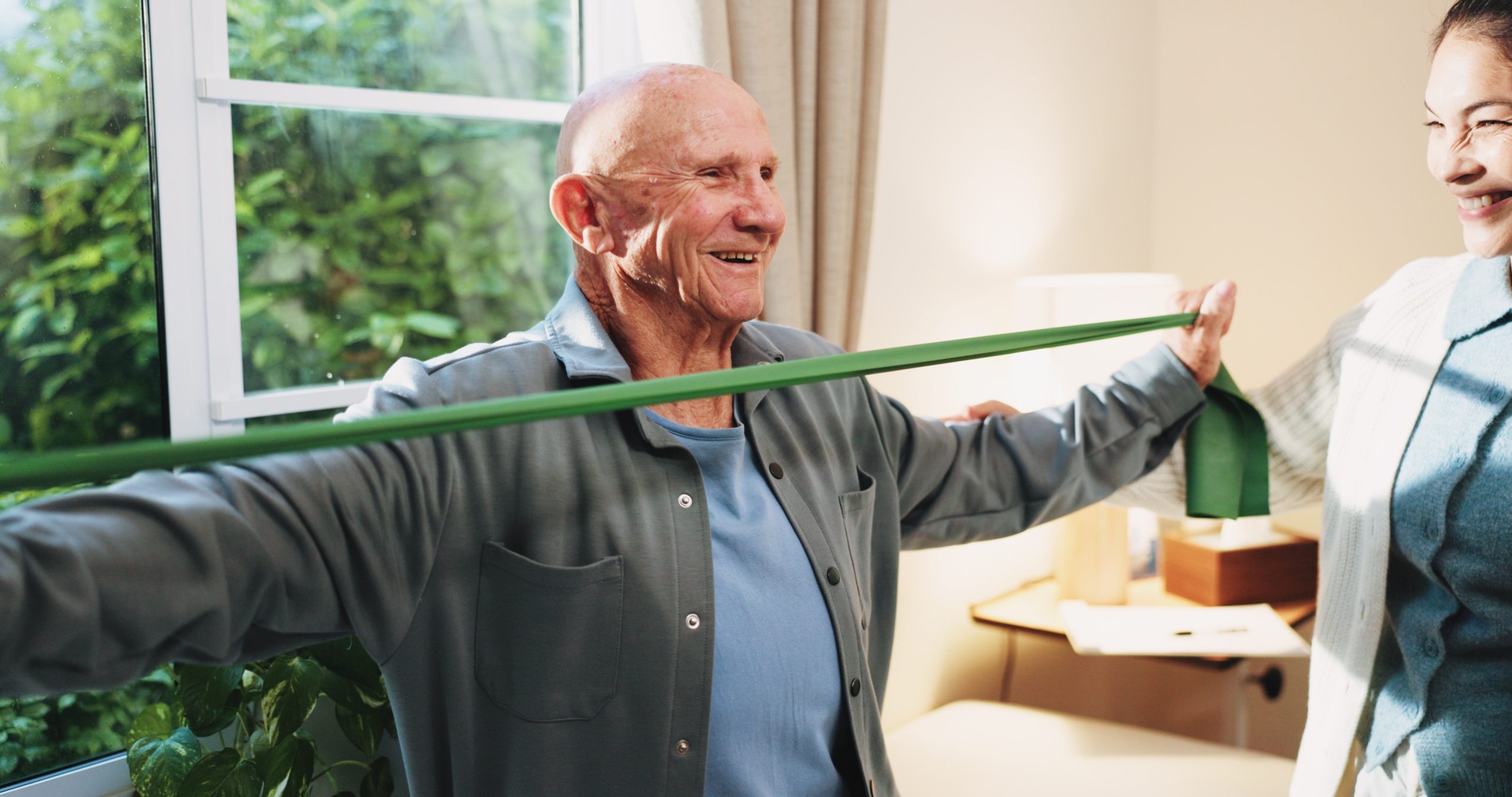
For many older adults, staying independent at home is about much more than simply being able to live alone. It means being able to get out of bed safely, walk to the kitchen, get in and out of a favorite chair, navigate the bathroom, and move around the home with confidence.
When illness, surgery, hospitalization, pain, or general weakness makes those everyday activities more difficult, physical therapy at home can make a meaningful difference.
At Seaside Home Health Care, our physical therapists work with patients right where everyday life happens—in their own homes. The goal isn’t simply to complete exercises. It’s to help patients become stronger, safer, and more confident doing the things they need and want to do each day.
Here are seven ways home health physical therapy can help.
1. Rebuild Strength After an Illness or Hospital Stay
Even a relatively short illness or hospital stay can leave an older adult feeling noticeably weaker.
Suddenly, standing up from a chair takes more effort. Walking across the room may be exhausting. Stairs that were manageable before may feel overwhelming.
Home Health Physical therapy can help patients gradually rebuild strength and endurance with exercises and activities tailored to their current abilities and individual goals.
The objective isn’t to push someone beyond what they can safely do. It’s to help them progressively regain the strength they need for everyday life.
2. Improve Balance and Reduce the Risk of Falls
A fall can have a significant impact on an older adult’s independence—and sometimes the fear of falling can be nearly as limiting as a fall itself.
A physical therapist can evaluate balance, walking patterns, muscle weakness, and other factors that may contribute to fall risk.
Home Health Physical Therapy can then focus on improving balance, strength, coordination, and safe movement so patients can feel more secure as they move throughout their homes.
3. Make Walking Safer
Walking isn’t always as simple as putting one foot in front of the other.
Out physical therapist can evaluate how a patient walks and identify difficulties that may be making mobility less safe. This may include weakness, poor balance, pain, decreased endurance, or improper use of a walker or cane.
The therapist can work with the patient on safer walking techniques and, when appropriate, help ensure assistive devices are being used correctly.
Sometimes small changes can make a big difference in confidence and safety.
4. Make Everyday Movements Easier
Think about how many times you stand up, sit down, turn, reach, or change positions during an ordinary day.
For someone experiencing weakness or mobility problems, these seemingly simple movements can become challenging.
Physical therapy can work on practical activities such as:
- Getting in and out of bed
- Standing up from a chair
- Getting on and off the toilet
- Navigating steps
- Moving safely from one room to another
- Getting in and out of a vehicle
These are the movements that help make independent living possible.
5. Help Manage Pain and Stiffness
Pain and stiffness can cause people to move less. Unfortunately, moving less can sometimes lead to even greater weakness and decreased mobility.
A physical therapist can develop an individualized plan designed to improve movement, flexibility, strength, and function while taking a patient’s medical condition and limitations into consideration.
For many patients, the goal isn’t simply to address discomfort—it’s to help them move more comfortably so they can participate more fully in everyday activities.
6. Restore Confidence After a Fall or Health Setback
After a fall, surgery, hospitalization, or serious illness, it’s common for someone to become hesitant about moving the way they once did.
They may stop walking as much. They may avoid certain rooms. They may rely more heavily on family members because they’re afraid something will happen.
Physical therapy provides an opportunity to practice movement in a safe, structured way.
As strength and balance improve, confidence often follows.
That confidence matters because independence isn’t just about what someone can physically do. It’s also about feeling safe enough to do it.
7. Address Challenges in the Patient’s Actual Home
One of the greatest advantages of home health physical therapy is that the therapist gets to see the patient’s real environment.
The therapist isn’t practicing with a generic set of stairs or a chair in a therapy gym. They’re seeing your stairs, your hallway, your favorite chair, and the actual spaces you navigate every day.
That allows therapy to focus on the specific challenges a patient encounters at home.
The goal is practical: How can we help you function as safely and independently as possible in the place where you live?
Physical Therapy Is About More Than Exercise
When people hear “physical therapy,” they often picture exercise bands, leg lifts, or walking laps.
Those may be part of therapy, but the bigger picture is function and independence.
Can you safely get up in the morning?
Can you walk to the kitchen?
Can you get out of your favorite chair?
Can you move through your home without constantly worrying about falling?
Can you continue doing the everyday things that allow you to remain at home?
Those are the kinds of goals that make physical therapy so valuable.
How Seaside Home Health Care Can Help
At Seaside Home Health Care, our physical therapy services are personalized to each patient’s needs, abilities, medical condition, and goals.
Whether someone is recovering from surgery, returning home after a hospitalization, managing a chronic condition, experiencing increased weakness, or having difficulty with balance and mobility, our therapy team can help develop a plan focused on improving safety and independence.
Because sometimes staying at home isn’t just about having the right help.
It’s about becoming strong enough and confident enough to keep doing as much as possible for yourself.
If you or someone you love has experienced a decline in strength, balance, walking, or mobility, talk with your healthcare provider about whether home health physical therapy may be appropriate. Contact Us today!
Seaside Home Health Care is here to help you stay stronger, safer, and more independent at home.